
- Tokyo for the modern base
- Kyoto for temples and imperial history
- Osaka for food and nightlife
- Hakone / Mount Fuji for onsen and scenery
- Hiroshima / Miyajima for history and reflection
For a first trip, 10 to 12 days is the sweet spot. Start in Tokyo and move west once.
Japan works best for Indian travellers when it is planned as a clean east-to-west route, not a scattered city checklist. For a first trip, the sweet spot is 10 to 12 days, with Tokyo, Hakone, Kyoto, Osaka, and Hiroshima/Miyajima doing the heavy lifting. That sequence gives you the full Japan mix: neon, nature, temples, food, and history without backtracking, luggage chaos, or train fatigue.
What makes Japan especially compelling for our HNWI (High Net Worth Individuals) clients is the precision of the experience. A private tea ceremony in Kyoto, a kaiseki dinner prepared in your ryokan room, or a helicopter charter over Mount Fuji — these are not afterthoughts; they are the fabric of the trip. This guide is written to help you decide which cities and regions to prioritise, and to give you a ready-made luxury framework you can use or refine.
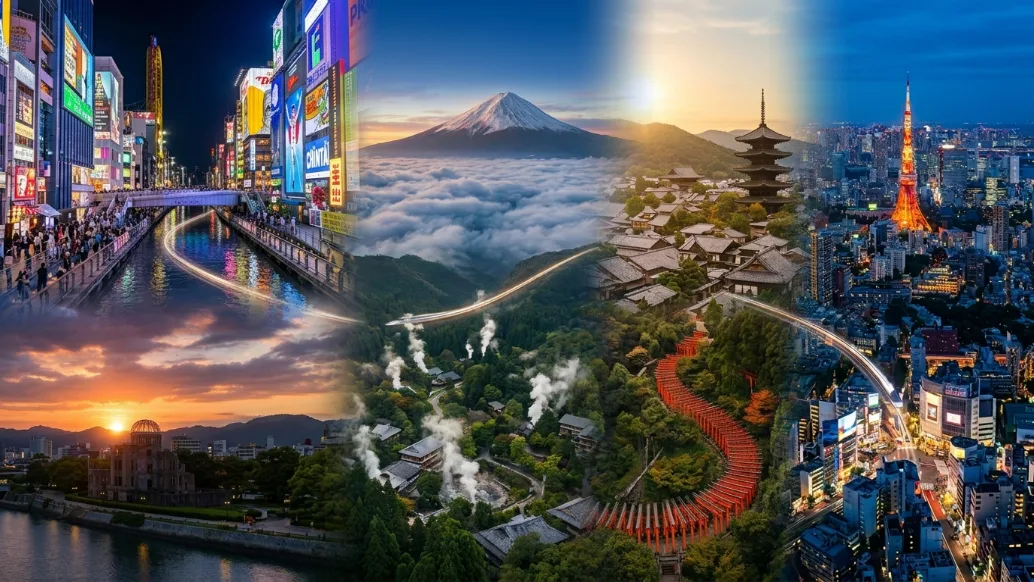
A journey through Japan's cities, culture, and landscapes.
Why is Japan a strong first international trip for Indian travellers?
Japan rewards the curious. The same country that gave us bullet trains and robotics also preserves 2,000-year-old Shinto rituals and crafts like kintsugi (golden repair) and washi papermaking. For Indian travellers, the draw is threefold:
- Cultural depth without language barriers: English signage is excellent in cities, and the Japanese hospitality ethos (*omotenashi*) means you are looked after even when you do not speak a word.
- Food that rivals any global cuisine: From Tokyo's 200+ Michelin-starred restaurants to Osaka's street-level *takoyaki* stalls, the culinary range is extraordinary. Vegetarian and Jain-friendly options are increasingly available when planned in advance.
- Seamless logistics: The Shinkansen network, punctual to the minute, makes multi-city travel effortless. You can breakfast in Tokyo and be in Kyoto for lunch.
When Is the Best Time to Visit Japan?
Timing shapes everything in Japan, from hotel availability, pricing, and the very mood of the cities.
- Late March to early April: Cherry blossom (*sakura*) season. For 2026, Japan's official cherry blossom forecast shows first bloom around 19 March in Tokyo (Chiyoda), 26 March in Osaka, and 19 March in Hiroshima, but blossom timing shifts with weather and temperature. Use the forecast as a planning guide, not a guarantee, and book peak-season hotels early. (Japan Travel)
- Mid-to-late November: Peak autumn foliage (*koyo*) in Kyoto, Hakone, and the Japanese Alps. The red maples against temple architecture are unforgettable.
- December to February: Winter in Hokkaido for powder skiing; crisp, clear days in Tokyo and Kyoto with fewer tourists.
- May and October: Shoulder seasons with pleasant weather, lower crowds, and better hotel availability.
For first-timers, I typically recommend October or late November. You avoid the sakura booking frenzy while still getting exceptional scenery.
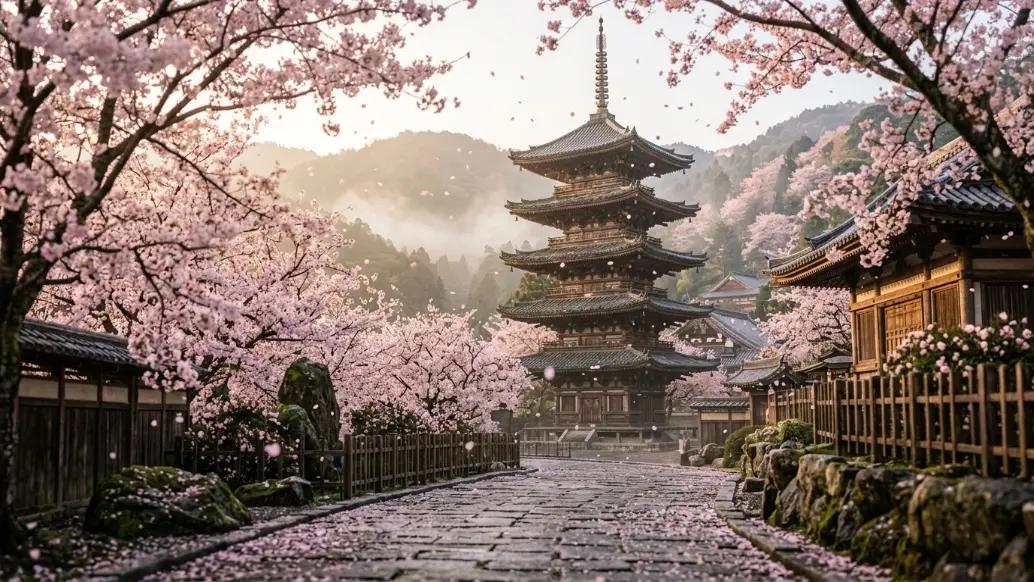
Cherry blossom season transforms Japan's cities and temple districts into some of the most photographed landscapes in the world.
Tokyo: Where to Start Your Japan Journey
Tokyo is not a city you "see" in two days. It is a city you layer, one neighbourhood at a time. For Indian travellers arriving on a long-haul flight from Delhi or Mumbai, Tokyo is the natural entry point.
What to Do in Tokyo
- Shibuya and Harajuku: The energy, the crossings, the boutique shopping. Start here to feel the pulse.
- Asakusa and Senso-ji Temple: Tokyo's oldest temple, surrounded by traditional stalls. Go early (before 8:00 AM) to avoid the tour-bus crush.
- Ginza and Marunouchi: Luxury retail and some of the world's finest department stores (Mitsukoshi, Isetan). The basement food halls (*depachika*) are an experience in themselves.
- TeamLab Planets or Borderless: Immersive digital art installations that have become a must-book for families.
- Tsukiji Outer Market: Sushi breakfast at 7:00 AM. It is touristy, but the quality is real.
Where to Stay in Tokyo
- Aman Tokyo — Minimalist luxury in the Otemachi financial district. The 30-metre pool and the views over the Imperial Palace are extraordinary.
- Park Hyatt Tokyo — The *Lost in Translation* hotel. Still the gold standard for service and skyline views from Shinjuku.
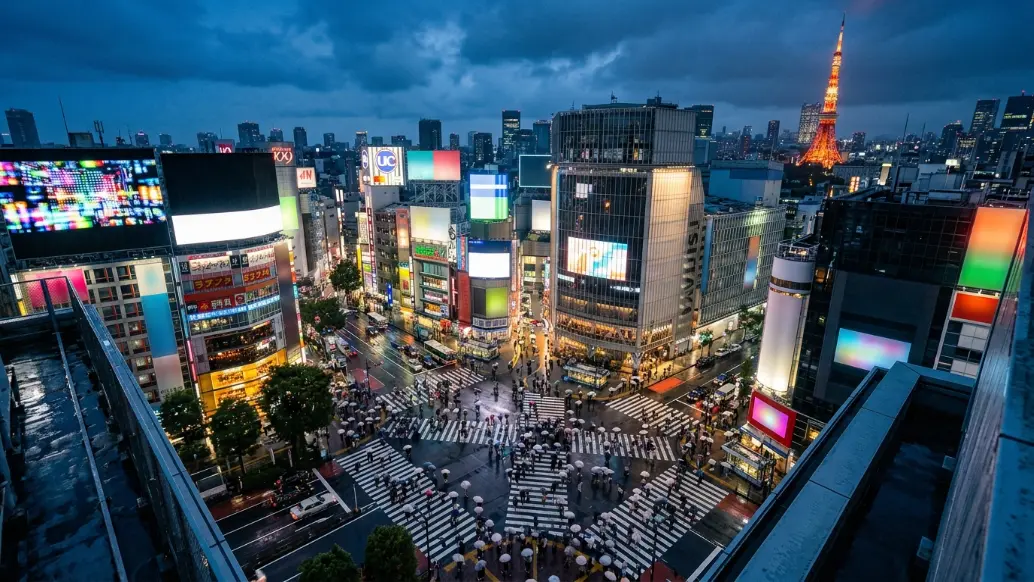
Shibuya after dark, where Tokyo's energy never slows.
Kyoto: Stepping Into Japan's Imperial Past
If Tokyo is Japan's future, Kyoto is its memory. With over 1,600 Buddhist temples, 400 Shinto shrines, and 17 UNESCO World Heritage sites, Kyoto demands three full days minimum.
What to Do in Kyoto
- Fushimi Inari Taisha: The 10,000 vermillion torii gates. Arrive by 6:30 AM to have the path to yourself.
- Kinkaku-ji (Golden Pavilion) and Ginkaku-ji (Silver Pavilion): Bookend a morning of temple-hopping.
- Arashiyama Bamboo Grove: Go early, then walk to the Tenryu-ji Temple gardens.
- Gion District: The historic geisha quarter. An evening stroll along Hanamikoji Street is essential.
- Nishiki Market: "Kyoto's Kitchen" , a 400-year-old food market with everything from *yuba* (tofu skin) to matcha sweets.
Where to Stay in Kyoto
- Hoshinoya Kyoto: A boat-in ryokan on the Oi River in Arashiyama. The most exclusive property in Kyoto; breakfast is served in your room.
- The Ritz-Carlton Kyoto: Overlooks the Kamogawa River. Impeccable service and a stunning spa.
- Four Seasons Kyoto: Set around an 800-year-old *ikebana* pond garden. A newer property that has quickly become a favourite with our Indian families.
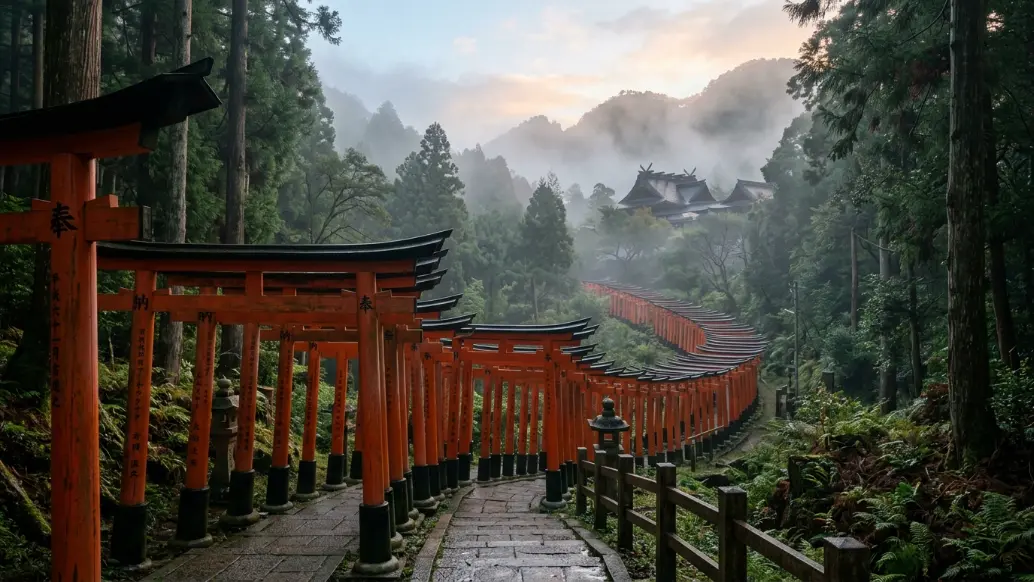
Kyoto preserves the rhythms of old Japan.
Osaka and Nara: Street Food and Ancient Temples
Osaka is often described as Japan's "kitchen," and the nickname is earned. It is also the gateway to Nara, which many travellers skip — a mistake.
What to Do in Osaka
- Dotonbori: Neon, street food, and the famous Glico running man sign. Try *takoyaki* (octopus balls) and *okonomiyaki* (savoury pancakes).
- Kuromon Ichiba Market: A 170-year-old market where chefs shop. The tuna and sea urchin stalls are extraordinary.
- Osaka Castle: Reconstructed, but the museum and park are worth a half-day.
What to Do in Nara (day trip)
- Todai-ji Temple: Houses the world's largest bronze Buddha. The wooden hall is the largest of its kind on earth.
- Nara Park: Over 1,000 free-roaming sika deer, considered divine messengers. Buy *shika senbei* (deer crackers) from vendors.
Hakone and Mount Fuji: Japan's Onsen Country
After the sensory overload of Tokyo, Kyoto, and Osaka, Hakone is where you exhale. It is a mountainous onsen (hot spring) region roughly 90 minutes from Tokyo by train, and it offers the most reliable views of Mount Fuji outside of climbing season.
What to Do in Osaka
- Lake Ashi Cruise: A pirate-ship-themed boat (sounds odd, looks stunning) across the volcanic lake with Fuji views.
- Owakudani Valley: Sulphur vents and black eggs boiled in volcanic hot springs. The ropeway ride over the valley is dramatic.
- Hakone Open-Air Museum: One of Japan's finest outdoor sculpture parks, with works by Picasso, Henry Moore, and Japanese masters.
- Private Onsen Experience: Many ryokans offer reservable private baths (*kashikiri-buro*) for couples or families.
Where to Stay in Hakone
- Gora Kadan: For travellers seeking an authentic Japanese experience, a Luxury Ryokan such as Gora Kadan combines traditional hospitality with premium amenities. A former summer villa of the Imperial family, it is now a Relais & Châteaux property where the service is almost unnervingly attentive.
- Hakone Ginyu: Perched on a mountainside with open-air baths in every room.
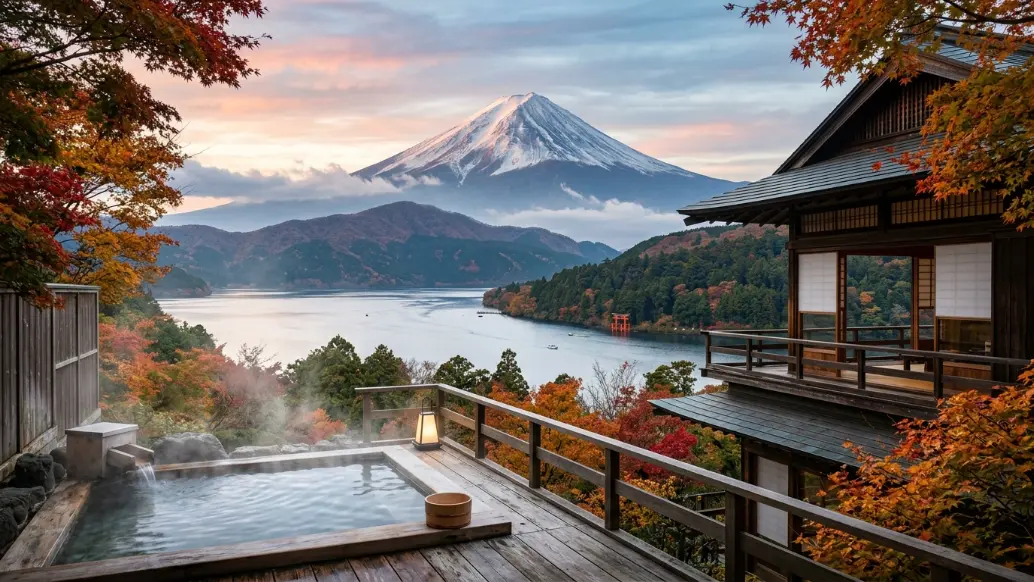
Mount Fuji rising above Hakone's tranquil landscape.
Hiroshima and Miyajima: History and the Floating Torii Gate
Hiroshima is not an easy visit, but it is an essential one. The Peace Memorial Park and Museum are profoundly moving. Most travellers pair Hiroshima with Miyajima Island, a 10-minute ferry ride away.
What to Do in Hiroshima
- Hiroshima Peace Memorial Park and Museum: Allow half a day. The A-Bomb Dome and Children's Peace Monument are haunting.
- Miyajima Island: The "floating" *torii* gate of Itsukushima Shrine, one of Japan's most photographed sights. At high tide, it appears to stand on water.
- Mount Misen: A ropeway ride to the summit for panoramic views of the Seto Inland Sea.
Should You Add Hokkaido or Okinawa to Your Trip?
For a first 10-day trip, I generally advise against it, as there is already more than enough in the Tokyo-Kyoto-Osaka-Hakone arc. But for repeat visitors or longer stays:
- Hokkaido: Japan's northern frontier. Best in winter (December–February) for skiing in Niseko, or in summer for lavender fields in Furano. Sapporo's ramen alley is pilgrimage-worthy.
- Okinawa: Subtropical islands with coral reefs, a distinct Ryukyu culture, and a slower pace. Think of it as Japan's answer to the Maldives — but with better food and less predictable weather in typhoon season (July–September).
How do Indian travellers reach Japan and get around efficiently?
Flights:
- Direct options: Air India and ANA (All Nippon Airways) operate non-stop flights from Delhi (DEL) to Tokyo Narita (NRT), with a flight time of approximately 8–9 hours. From Mumbai (BOM), Japan Airlines (JAL) and ANA offer direct or near-direct services to Tokyo.
- Connecting options: Travellers from Bengaluru, Hyderabad, Chennai, and Kolkata typically connect via Singapore (Singapore Airlines), Bangkok (Thai Airways), or Hong Kong (Cathay Pacific).
Visa:
- Indian travellers can apply for Japan's eVISA through VFS Global. The Embassy of Japan in India says the eVISA system started on 1 April 2024, it is a single-entry short-term tourism visa for up to 90 days, and applications can be accepted from 3 months before travel. Processing times can vary significantly, so apply well in advance. Japan does not require a passport with six months' validity; VFS says the passport only needs to be valid for the duration of stay. (Embassy of Japan in India)
Getting Around:
- Shinkansen: The bullet train network connects Tokyo, Kyoto, Osaka, and Hiroshima in hours. The Nozomi service is the fastest; the Hikari is slightly slower but covered by the JR Pass.
- JR Pass: The official 7-day ordinary JAPAN RAIL PASS costs 50,000 yen, and the 7-day Green Car pass costs 70,000 yen. The pass is only worth recommending when the itinerary includes enough long-distance JR travel to beat point-to-point tickets, and Nozomi/Mizuho Shinkansen require a special ticket. Keep the recommendation conditional instead of saying it "always pays for itself." (japanrailpass.net)
- IC Cards (Suica / Pasmo): Rechargeable cards for local trains, buses, and convenience stores. Essential for city transport.
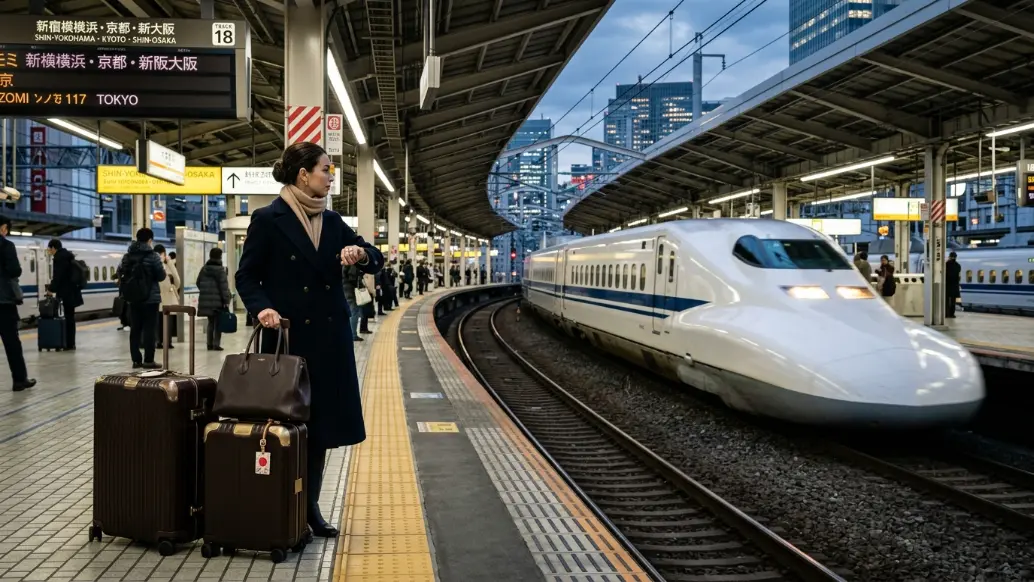
The Shinkansen makes cross-country travel effortless.
Our Japan Planning Method for Indian Travellers
At Bliss Travels, we use a simple five-step framework for every Japan itinerary we build:
1. Land in Tokyo
2. Sleep there first
3. Move west once only
4. Add one onsen stop
5. Finish in Osaka or depart from Kansai
This sequencing reduces luggage drag, limits rail fatigue, and keeps the trip linear instead of circular. It is the difference between a Japan trip that feels effortless and one that feels like a logistics puzzle. Many premium hotels and travel specialists provide a dedicated Concierge Service for restaurant reservations, transportation, and personalized experiences to further elevate this journey.
What Does a 10-Day Luxury Japan Itinerary Look Like?
This is the framework I use for roughly 70% of our first-time Japan clients. It balances cities, culture, nature, and downtime — and it flows in one direction to avoid backtracking.
Table 1: 10-Day Luxury Japan Itinerary (Day-by-Day)
| Day | City/Region | Key Experiences | Suggested Stay |
|---|---|---|---|
| 1 | **Tokyo** | Arrive Narita/Haneda. Private airport transfer to hotel. Evening: Ginza stroll, early dinner at hotel. | Aman Tokyo or Park Hyatt Tokyo |
| 2 | **Tokyo** | Morning: Tsukiji Outer Market sushi breakfast. Afternoon: TeamLab Planets (pre-booked). Evening: Shibuya crossing and dinner at a Michelin-starred tempura restaurant. | Aman Tokyo or Park Hyatt Tokyo |
| 3 | **Tokyo** | Morning: Senso-ji Temple and Asakusa. Afternoon: Private guided tour of Meiji Shrine and Harajuku. Evening: Rooftop bar at Mandarin Oriental or Andaz Tokyo. | Aman Tokyo or Park Hyatt Tokyo |
| 4 | **Hakone** | Morning: Shinkansen to Odawara, private car to ryokan. Afternoon: Lake Ashi cruise, Owakudani ropeway. Evening: Private kaiseki dinner in your room, followed by onsen. | Gora Kadan or Hakone Ginyu |
| 5 | **Hakone** | Morning: Hakone Open-Air Museum. Afternoon: Relaxation — private onsen, spa treatment, or forest walk. Evening: Second night of ryokan stay. | Gora Kadan or Hakone Ginyu |
| 6 | **Kyoto** | Morning: Shinkansen to Kyoto via Shin-Osaka. Afternoon: Check into hotel/ryokan. Evening: Gion district walking tour with private guide. | The Ritz-Carlton Kyoto or Hoshinoya Kyoto |
| 7 | **Kyoto** | Morning: Fushimi Inari Taisha (early start). Afternoon: Kinkaku-ji and Ryoan-ji rock garden. Evening: Private tea ceremony or geisha dinner (if arranged well in advance). | The Ritz-Carlton Kyoto or Hoshinoya Kyoto |
| 8 | **Kyoto / Nara** | Morning: Arashiyama Bamboo Grove and Tenryu-ji. Afternoon: Day trip to Nara — Todai-ji and Nara Park. Return to Kyoto for evening. | The Ritz-Carlton Kyoto or Hoshinoya Kyoto |
| 9 | **Osaka** | Morning: Shinkansen to Shin-Osaka. Afternoon: Osaka Castle and Kuromon Ichiba Market. Evening: Dotonbori street food tour with guide. | The St. Regis Osaka or Conrad Osaka |
| 10 | **Osaka / Departure** | Morning: Last-minute shopping or museum visit. Afternoon: Private transfer to Kansai International Airport (KIX) for departure. | — |
**Data note:** Costs are planning estimates for June 2026 and vary by season, exchange rate, hotel category, and booking lead time.
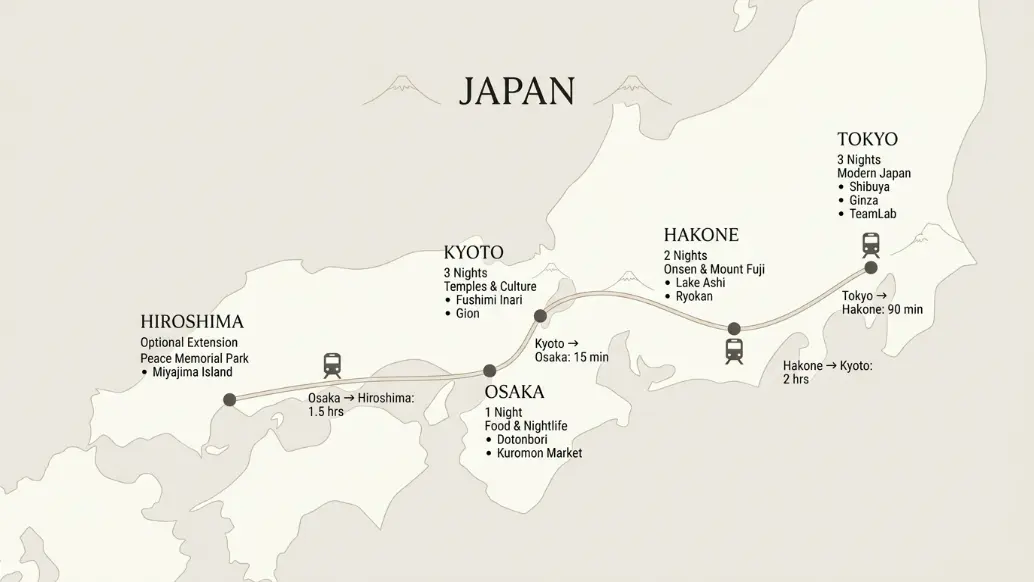
Tokyo to Hiroshima, without unnecessary backtracking.
How Much Does a Luxury Trip to Japan Cost?
The table below is a planning estimate, not a live quote. Prices shift with season, exchange rates, and hotel inventory, so use it as a budgeting frame rather than a fixed rate card.
Table 2: Japan Trip Cost Breakdown: Budget / Mid-Range / Luxury (₹ per person, 10 days, excluding international flights)
| Category | Budget | Mid-Range | Luxury |
|---|---|---|---|
| **Accommodation** | ₹60,000 – ₹90,000 (business hotels, hostels) | ₹1,50,000 – ₹2,50,000 (4-star hotels, standard ryokan) | ₹4,00,000 – ₹7,00,000+ (Aman, Hoshinoya, private villas) |
| **Intercity Transport** | ₹25,000 – ₹35,000 (7-day JR Pass, local trains) | ₹35,000 – ₹50,000 (JR Pass + some private transfers) | ₹60,000 – ₹1,00,000 (private cars, Green Car Shinkansen, helicopter transfers) |
| **Food** | ₹30,000 – ₹50,000 (convenience stores, casual restaurants) | ₹70,000 – ₹1,20,000 (mix of casual and fine dining) | ₹1,50,000 – ₹3,00,000+ (Michelin-starred meals, private kaiseki, sake pairings) |
| **Experiences / Guides** | ₹10,000 – ₹20,000 (self-guided, free attractions) | ₹40,000 – ₹80,000 (group tours, some private guiding) | ₹1,00,000 – ₹2,50,000+ (private guides every day, exclusive access, geisha dinners) |
| **Total (per person)** | ₹1,25,000 – ₹1,95,000 | ₹2,95,000 – ₹5,00,000 | ₹7,10,000 – ₹13,50,000+ |
**International Flights (separate):**
- Delhi/Mumbai to Tokyo return in economy: roughly ₹45,000 – ₹70,000.
- Business class: ₹1,80,000 – ₹3,50,000+ depending on season and carrier.
Data note: Costs, visa rules, rail pricing, and bloom timing change by season and exchange rate. This guide should be checked again before publication and again before peak travel windows.
Frequently Asked Questions
-
How many days do I need for Tokyo, Kyoto, Osaka, and Hakone?
For a first trip, 10 days is the minimum that feels comfortable. Twelve to fourteen days lets you add Hiroshima/Miyajima without rushing. Anything under 10 days turns the trip into train-station speedrunning.
-
Do Indians need a visa to visit Japan?
Yes. Indian passport holders must obtain a visa before travel. You can apply through the Japan eVISA system (for short-term tourist visits) or submit a physical application at a VFS Global Japan visa application centre in Delhi, Mumbai, Bengaluru, Chennai, Kolkata, or Hyderabad. The Embassy of Japan in India says applications can be accepted from 3 months before travel, and processing times can vary significantly. Japan does not require a passport with six months' validity; VFS says the passport only needs to be valid for the duration of stay. (Embassy of Japan in India)
-
What is the best time of year to visit Japan for cherry blossoms?
For 2026, Japan's official cherry blossom forecast shows first bloom around 19 March in Tokyo (Chiyoda), 26 March in Osaka, and 19 March in Hiroshima, but blossom timing shifts with weather and temperature. Use the forecast as a planning guide, not a guarantee, and book peak-season hotels early. (Japan Travel)
-
Is the JR Pass worth it for a 10-day trip?
The JR Pass is not a default yes anymore. It only makes sense when your route includes enough long-distance JR travel to offset the pass price. For this itinerary, calculate the live fare before recommending it, rather than treating it as automatically cost-saving. The official 7-day ordinary pass costs 50,000 yen, and the 7-day Green Car pass costs 70,000 yen. Nozomi/Mizuho Shinkansen require a special ticket. (japanrailpass.net)
-
Can I visit Tokyo, Kyoto, and Osaka without a guide?
Absolutely. Japan's transport system is intuitive, signage is bilingual, and Google Maps works flawlessly. That said, a private guide transforms the experience. In Kyoto, a guide can explain the symbolism of a Zen rock garden or navigate the backstreets of Gion to find a quiet *ochaya* (teahouse). In Tokyo, they can secure last-minute reservations at restaurants that do not accept walk-ins. For first-timers, I recommend a mix: self-guided for neighbourhood wandering, private guides for 2–3 key days.
-
How much does a luxury 10-day trip to Japan cost from India?
Excluding international flights, a luxury 10-day trip costs approximately ₹7,00,000 to ₹13,50,000 per person. This includes stays at properties like Aman Tokyo or Hoshinoya Kyoto, private transfers, Michelin-starred dining, and daily private guiding. Add international business-class flights (₹1,80,000–₹3,50,000 return) and you are looking at ₹9,00,000 to ₹17,00,000 per person for the full package. See Table 2 above for a detailed breakdown.
-
Should I stay in a ryokan or a hotel in Kyoto?
Both, if your itinerary allows. A ryokan like Hoshinoya Kyoto offers an immersive cultural experience with tatami floors, futon bedding, *kaiseki* meals, and onsen baths. It is ideal for 1–2 nights. A Western luxury hotel like The Ritz-Carlton Kyoto or Four Seasons Kyoto offers familiar comforts, larger rooms, and better luggage storage, ideal for the remainder of your stay. I often book clients into a ryokan for their first two Kyoto nights (the "cultural immersion" phase) and a hotel for the final night (the "repack and depart" phase).
-
Is Mount Fuji visible year-round, and which month gives the best views?
Mount Fuji is visible year-round from Hakone and the Fuji Five Lakes region, but visibility is best during winter (December–February) and early spring (March), when the air is clearest. Summer (June–August) often brings haze and cloud cover that obscures the peak. The official climbing season is July and August, but for views rather than climbing, January and February are your best bet. Hakone's Lake Ashi offers some of the most reliable vantage points.
-
How far in advance should I book a luxury Japan itinerary?
For standard travel (shoulder season, 4-star hotels), 3–4 months is sufficient. For luxury travel during sakura or autumn foliage, 6–9 months is the minimum and for properties like Hoshinoya Kyoto or Gora Kadan, 9–12 months is advisable. Flights should be booked 3–4 months out for the best business-class fares. At Bliss Travels, we typically start planning Japan itineraries 8–10 months ahead for peak-season travel.
Conclusion
Japan is one of those destinations where the route matters as much as the places. Get the sequencing right — Tokyo first, move west once, add one onsen stop — and the trip practically runs itself. Book peak-season stays early, use one rural stop to slow the trip down, and remember that the best Japan experiences are the ones you do not rush.
If you want this turned into a date-specific Japan plan based on your budget, departure city, and travel style, build it around a Tokyo-to-Osaka westbound route.
Have questions about planning your next trip? Reach out to the Bliss Travels team at www.blisstravels.in.
Sources used to verify this guide:
- Japan National Tourism Organization
- Embassy of Japan in India — eVISA Information
- JAPAN RAIL PASS Official Site
- VFS Global Japan Visa Services
- Japan Travel — Cherry Blossom Forecast
About the Author